Hi-Vis Fabrics Explained: What Workwear Buyers Need to Know
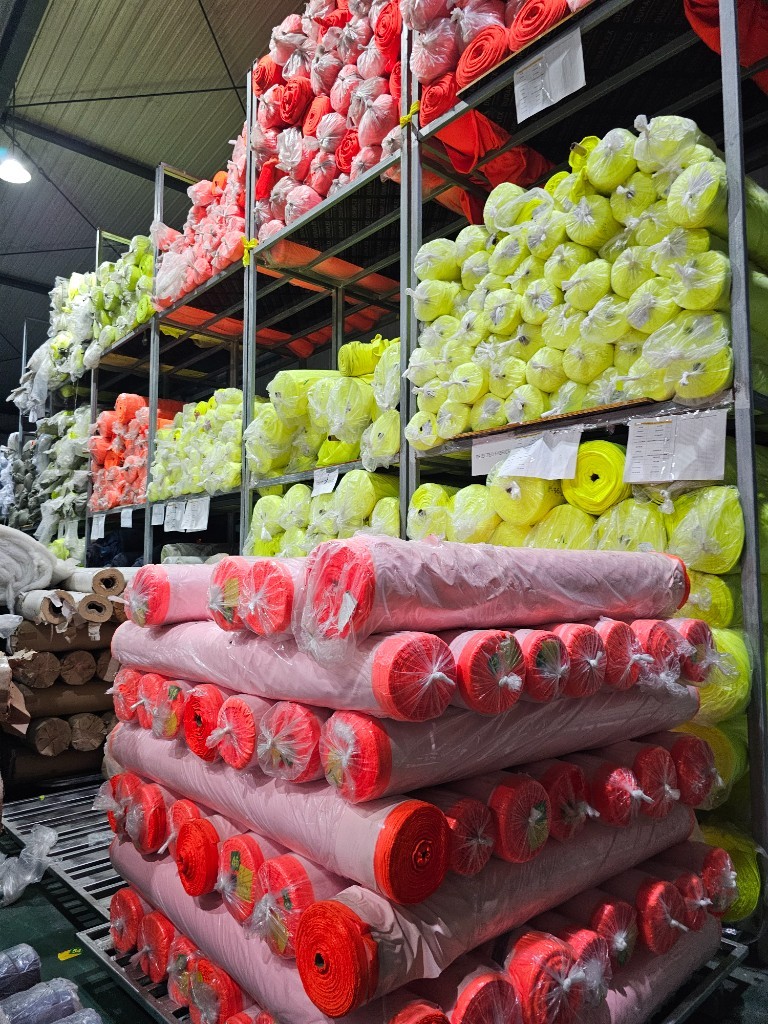
A lightweight hi-vis vest, a polo, a stretch trouser and a waterproof jacket can all meet EN ISO 20471 — with almost nothing in common between the fabrics used to make them. Asking a supplier for an “EN ISO 20471 fabric” is rarely enough. Buyers still need the right construction, weight, composition, stretch, finish, usable width and care performance, and the fluorescent material has to work with the reflective tape and garment design.
For garment-level rules — classes, minimum material areas and tape placement — see our EN ISO 20471 buyer's guide. This article focuses on the fluorescent background fabrics and what to specify when comparing supplier offers.
In this article
- What makes a fabric suitable for hi-vis workwear?
- Lightweight knitted fabrics
- Sweatshirt, fleece and midlayer fabrics
- Woven hi-vis fabrics
- Stretch hi-vis fabrics
- Waterproof hi-vis fabrics
- What EN ISO 20471 requires from fabric
- How to compare two fabric offers
- Approved fabric vs approved garment
What makes a fabric suitable for hi-vis workwear?
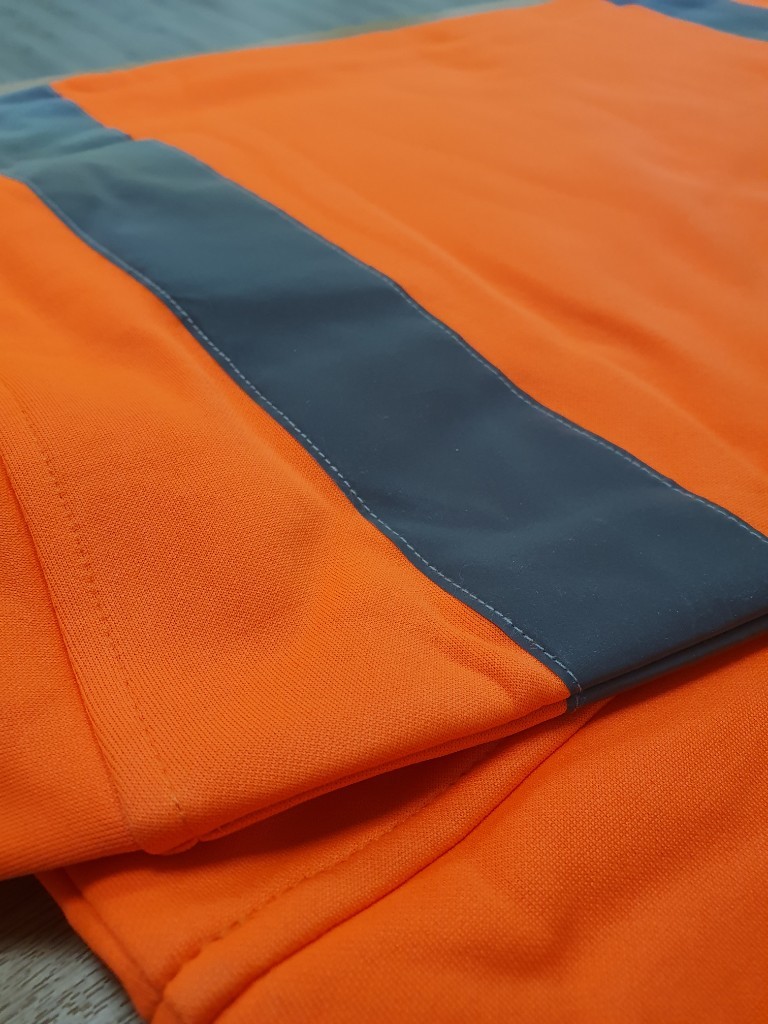
Most EN ISO 20471 garments combine two visibility materials: a fluorescent background fabric (yellow, orange-red or red) for daylight and low-light conspicuity, and retroreflective tape (normally silver) for visibility under vehicle headlights at night.
Colour is measured instrumentally against chromaticity and luminance limits — a fabric does not qualify because it looks bright enough. The standard also recognises combined-performance material (fluorescent and retroreflective in one), but for most programmes the challenge is selecting the right fluorescent background fabric.
Lightweight knitted fabrics: vests, T-shirts and polos
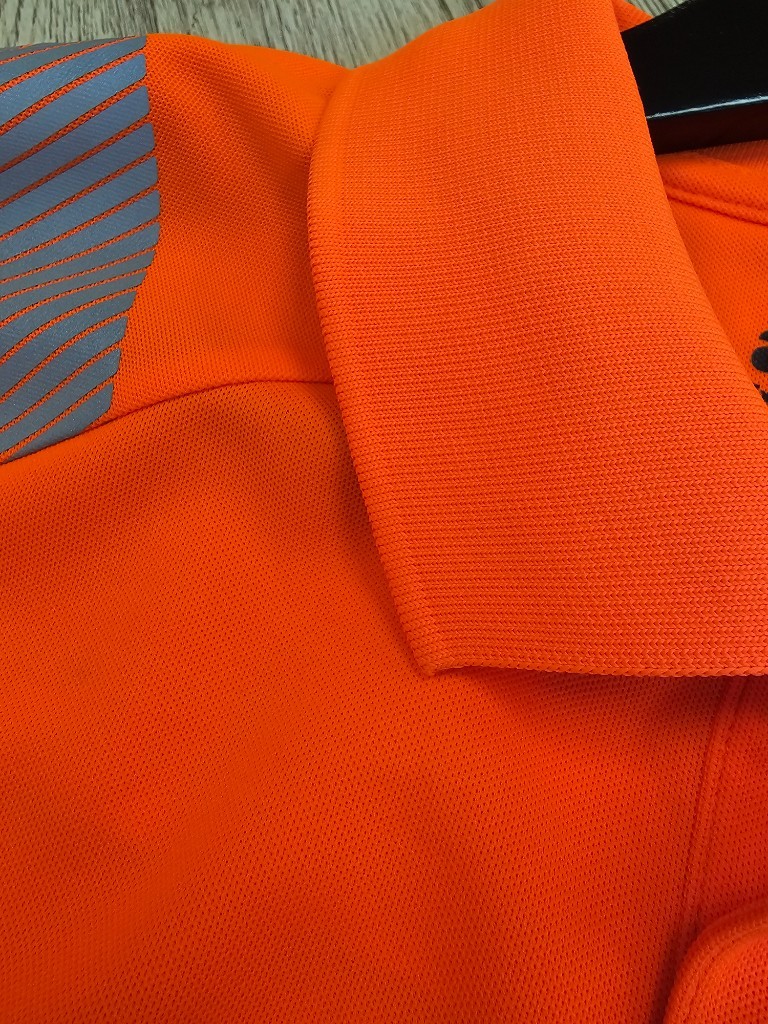
The simplest hi-vis products use lightweight polyester knits, but a visitor waistcoat and a daily-wear polo need very different constructions even when both are fluorescent yellow. Economy vests often sit around 120–150gsm birdseye mesh; daily-wear polos are typically 180–220gsm pique or interlock with better dimensional stability and moisture movement.
Birdseye suits low-cost vests where airflow matters; interlock and pique trade appearance, comfort and wash performance differently on polos worn for full shifts. Two fabrics both described as “100% polyester” can have completely different structures, finishes and behaviour.
Specify construction, weight and finish — not composition and colour alone. Confirm tape bonds on the actual knit substrate (heat-applied tape on mesh behaves differently from pique), and anti-snag performance if the mesh is open enough to catch on equipment.
Sweatshirt, fleece and midlayer fabrics
Hi-vis sweatshirts, hoodies, fleeces and quarter-zips are heavier constructions that face more abrasion, pilling and bulk industrial laundering than lightweight vests — durability and colour stability across the garment life matter more than on a disposable waistcoat. Polyester dominates, but blends can work if the finished fabric in the fluorescent colour being supplied actually performs.
Jersey sweatshirt fleece typically runs lighter than brushed fleece midlayers (often 280–350gsm for fleece bodies). Anti-pilling and brush stability matter on garments that are laundered in bulk and worn against other workwear. Align the mill’s industrial wash route with the care cycles you intend to claim on the label.
That matters on repeat orders: a development lot may pass colour comfortably, then a later dye lot drifts toward the permitted limits. Fluorescent shades need tighter mill control than fashion colours because compliance is instrument-based, not visual approval.
Woven hi-vis fabrics for trousers and jackets
Hi-vis trousers, jackets, coveralls and bib-and-braces need more mechanical performance than knitted tops. Typical options include polyester-rich twills, polyester/cotton blends, ripstop, mechanical-stretch and polyester/elastane constructions — often 210–280gsm for trousers depending on season and duty.
Polyester/cotton is common in workwear trousers, but EN ISO 20471 colour assessment applies to the fluorescent face of the material. In practice, polycotton hi-vis fabrics usually need a polyester-rich outer face to hold the fluorescent dye and meet chromaticity limits — a cotton-dominant face is rarely a workable route to compliance.
Confirm tear, tensile or burst results tied to the EN ISO 20471 garment-material requirements for the construction you are buying — not a generic “20471” header on a certificate. Abrasion, recovery and dimensional stability still vary sharply by end use: a delivery-driver trouser is not the same specification as one for heavy industrial work.
Stretch hi-vis fabrics
Stretch matters for trousers, shorts and fitted jackets — via elastane (often 2–4% in mechanical-stretch wovens, higher in knit panels), mechanical stretch yarns or positioned stretch panels. Each route trades recovery, durability, cost and wash appearance differently.
Hi-vis adds a placement rule: if a non-fluorescent stretch panel replaces background fabric, that area no longer counts toward the garment’s qualifying fluorescent area. Large knee panels, yokes, gussets and side panels can therefore change the intended class and add marker complexity — fabric and garment design should be reviewed together.
Waterproof hi-vis fabrics
Waterproof hi-vis safety outerwear must deliver weather protection and fluorescent performance on the same face — whether the shell is coated, laminated, breathable membrane or non-breathable coated only.
For serious rain programmes, hydrostatic head is a useful starting ask (10,000mm+ is a common benchmark for export rainwear — confirm against your end-use and wash claim). Coating or membrane durability, seam-sealing compatibility, tape bonding and wash performance all interact. Heat-applied reflective tape must bond at application temperatures that do not damage the coating or fluorescent colour. In a technical rainwear product, fabric, reflective tape, seam tape and application settings are one system, not four separate purchases.
What does EN ISO 20471 actually require from the fabric?
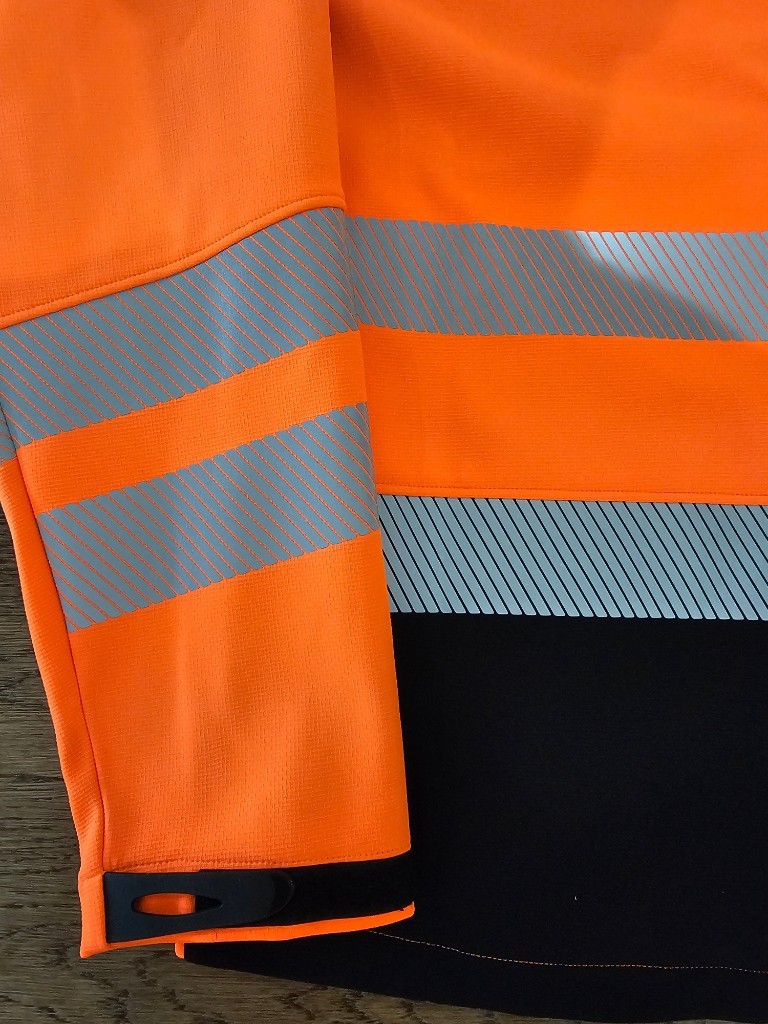
This section covers material testing — fluorescent colour, durability and physical performance on the background fabric. Garment design rules (classes, minimum areas, tape placement) sit in our EN ISO 20471 buyer's guide.
Colour is only part of the assessment. Testing typically covers fluorescent colour measurement, Xenon arc exposure, colourfastness, physical performance and dimensional stability. Retroreflective materials are assessed new and after pre-treatment.
A fabric within the permitted colour space when new can shift after outdoor exposure, so durability of colour matters — not just the initial lab dip or bulk shade.
When a supplier says a fabric is “20471 approved”, ask:
- Which exact construction was tested — a similar mill offer is not automatic evidence
- Which fluorescent colour was tested — yellow, orange-red and red are not interchangeable
- What care process and how many cycles were claimed
- Whether the material being ordered matches the tested construction (yarn, weight, finish, coating or dye route)
Recycled polyester and hi-vis fabrics
Recycled polyester can be used in hi-vis workwear, but recycled content and compliance are separate questions. The material still has to deliver the same fluorescent colour, durability and physical performance as virgin fibre — a sustainable workwear claim does not lower the technical bar.
Ask about traceability and certification separately from colour, testing, care and repeatability. A strong recycled-content claim cannot compensate for a fabric that does not perform.
A practical way to compare two hi-vis fabric offers
Usable width is easy to overlook: it does not affect EN ISO 20471 compliance, but it changes marker efficiency and FOB cost. A cheaper price per metre on a narrower fabric often does not make the garment cheaper — compare cost at finished garment consumption, not metre price alone.
When two offers look similar, put this side by side:
- Construction — durability, comfort and appearance
- Composition — performance, care and cost
- Weight — suited to garment and end use
- Usable width — marker efficiency and consumption
- Stretch and recovery — mobility and long-term shape
- Finish/coating — weather performance, handfeel and tape application
- Fluorescent colour test evidence — relevant material assessed
- Care/pre-treatment route — matches intended garment claim
- Dimensional stability — fit and repeat laundering
- Physical performance — matches intended use
- Reflective-tape compatibility — especially for heat-applied systems
- Bulk colour controls — development-to-bulk consistency
This usually tells you more than comparing price per metre.
Developing a hi-vis range? Share your product brief and we will help you compare fabric specifications, tape systems and garment constructions against the intended EN ISO 20471 claim.
An approved fabric does not make an approved garment
EN ISO 20471 applies to finished garment design as well as materials: minimum fluorescent and retroreflective areas, and where those materials sit on the garment. A compliant fabric can produce a non-compliant garment if contrast panels, pockets, branding or styling lines reduce visible fluorescent area, or if tape is placed incorrectly.
Material approval is the start of the process, not the end. The useful specification is not “hi-vis yellow polyester” — it is the fabric that balances visibility, garment performance, comfort, durability, consumption and cost for the product being developed.
Need help selecting hi-vis fabrics for your programme?
Source Workwear helps buyers route the right fluorescent fabrics, reflective systems and garment constructions for EN ISO 20471 programmes — from development sampling through repeat production.
Frequently asked questions
What does EN ISO 20471 require from hi-vis fabric?
Colour is only part of the assessment. Testing typically covers fluorescent colour measurement, Xenon light exposure, colourfastness, physical fabric performance and dimensional stability. Confirm which exact construction, fluorescent colour, care process and number of care cycles were tested — a similar mill offer is not necessarily evidence for the material being supplied.
Does an approved fabric mean an approved garment?
No. EN ISO 20471 applies to the finished garment design as well as the materials, including minimum material areas and placement. A compliant fluorescent fabric can be used to make a non-compliant garment if contrast panels, pockets, branding or tape placement reduce the qualifying fluorescent area.
Why does Xenon testing matter for fluorescent fabrics?
Fluorescent colour must remain effective after light exposure. The standard assesses colour before and after Xenon arc exposure — a fabric within limits when new can move closer to the boundary outdoors, so durability of colour is part of performance, not just the initial lab dip.
Can recycled polyester be used in hi-vis workwear?
Yes, but recycled content and compliance are separate. The material still has to deliver the same fluorescent colour, durability and physical performance as virgin fibre. A recycled-content claim cannot compensate for a fabric that does not perform.