Finding Hi-Vis Suppliers in Bangladesh: What Buyers Should Know Before They Start
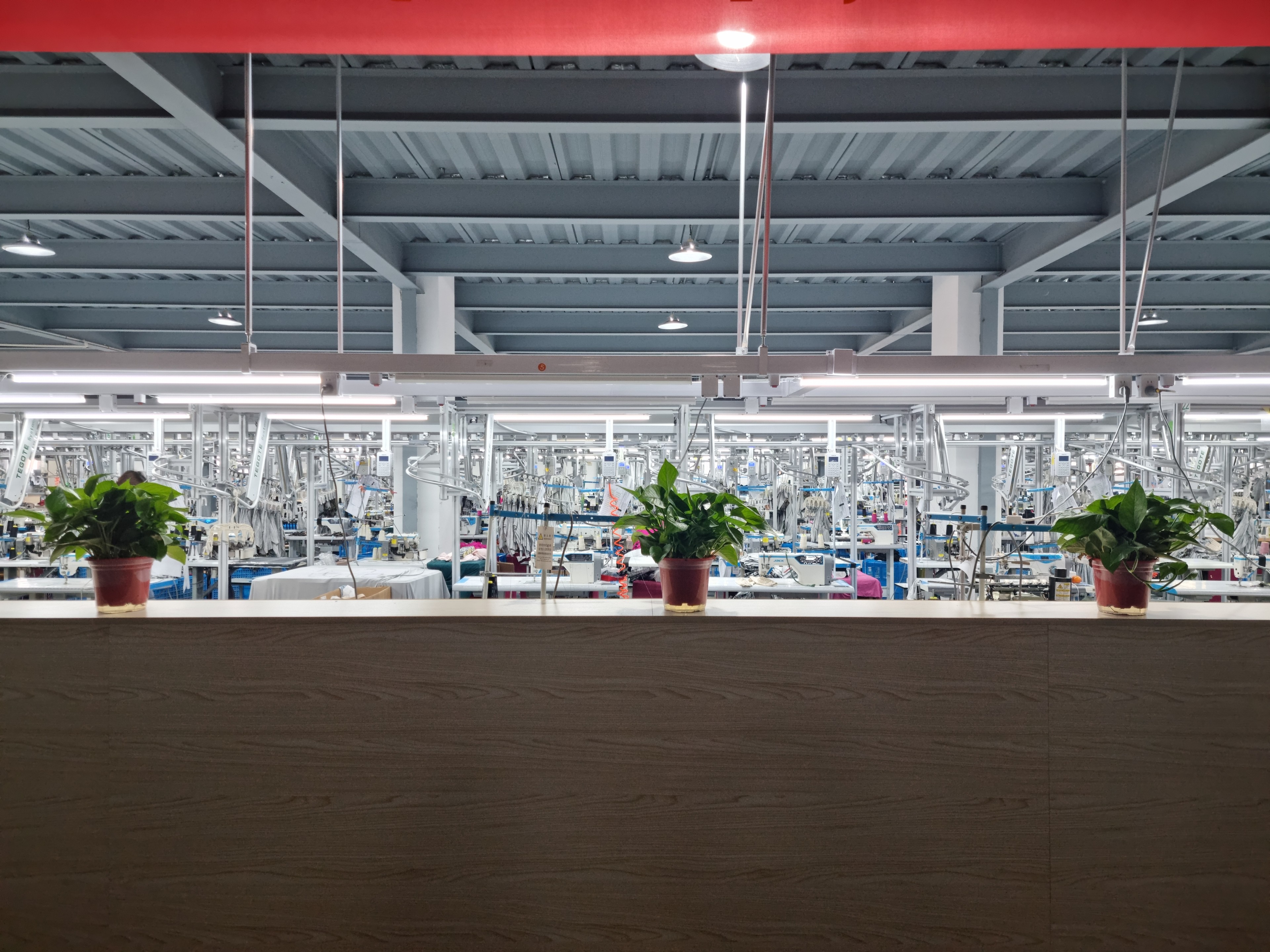
Bangladesh is attracting genuine attention as a hi-vis sourcing base. Duty-free access into the EU under the Everything But Arms arrangement, a competitive cost structure and a growing wave of Chinese manufacturing investment all make the commercial case real. But the search for suppliers reveals a more complicated picture.
Hi-vis is not a mature garment category in Bangladesh. It is growing, but the factories properly equipped to produce it at export quality are a small fraction of a very large industry. This piece covers that gap: what it means in practice, where it shows up, and how buyers can navigate it without losing months to dead ends.
Hi-vis is still a nascent category in Bangladesh
Most of Bangladesh's garment export industry was built around knitwear basics and woven fashion for European and North American retailers. That is where the scale is, where most factories are optimised, and where most investment in training, machinery and quality systems has historically gone.
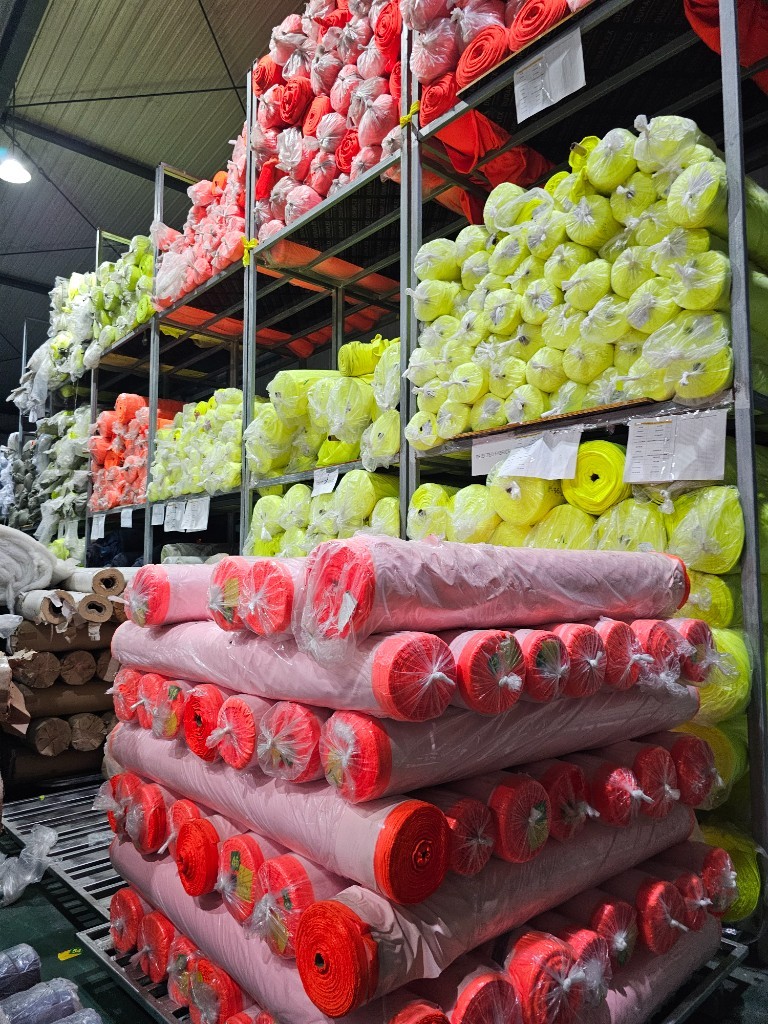
Hi-vis workwear is a fundamentally different product. It is technically demanding, compliance-driven (EN ISO 20471 in Europe, ANSI/ISEA 107 in North America), and it requires a material supply chain that most Bangladesh factories have never needed to manage: fluorescent background fabrics with specific photometric values, retroreflective tape grades, segmented tape. The factories that have built genuine capability in this category are a small group within a very large industry. That number is growing, but slowly, and it matters when you start looking.
What Bangladesh can actually produce
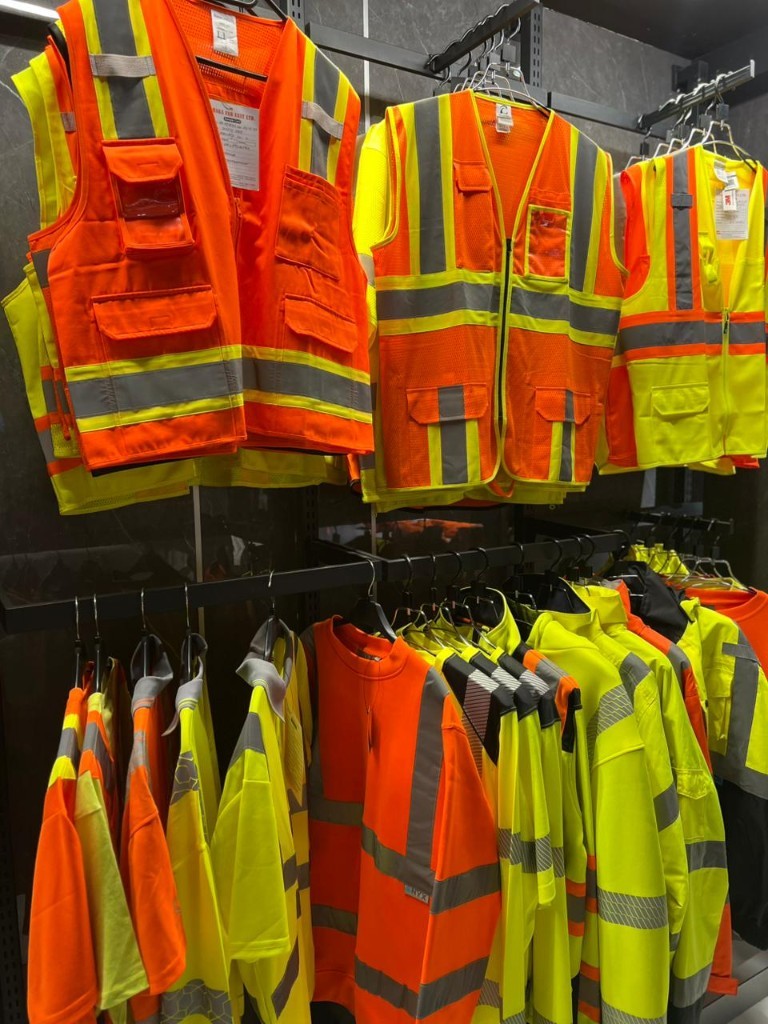
The range of hi-vis products available in Bangladesh is broader than most buyers expect. Vests, executive vests, polos, T-shirts, sweatshirts, cargo trousers, coveralls, softshells, padded jackets, waterproof outerwear, taped-seam rainwear: a hi-vis clothing manufacturer building a full private label programme can find most of it here.
Capability varies significantly across that list, though. A basic safety vest with sewn reflective tape is achievable across a wider set of factories than a compliant segmented-tape polo or a taped-seam waterproof jacket. Buyers scoping a full programme need to think in product tiers rather than assuming a single factory can deliver everything competitively.
Segmented tape is where the market separates
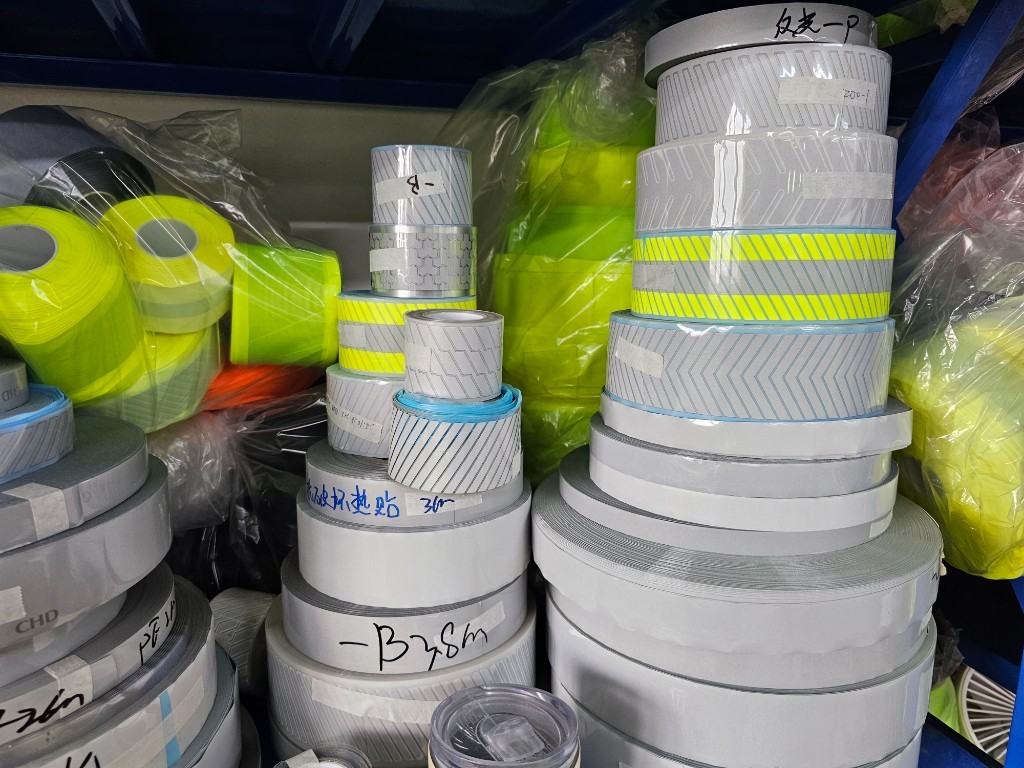
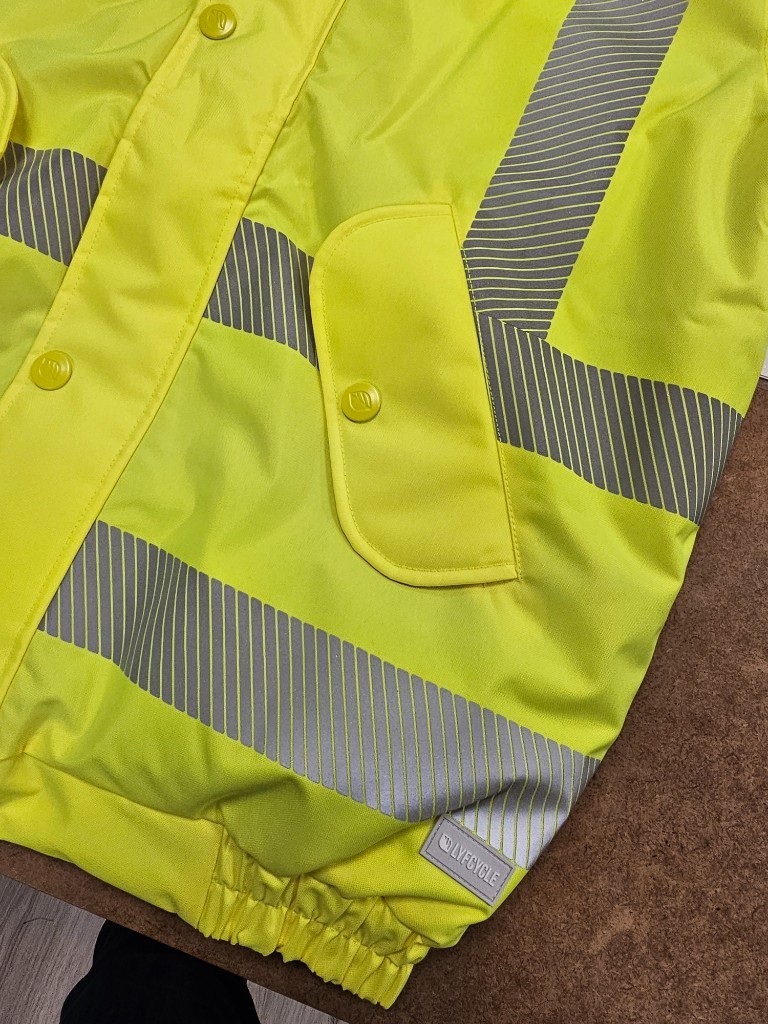
Segmented reflective tape is now standard across most modern hi-vis polos, T-shirts, softshells and performance jackets. It changes how garments look, move and wash, and it changes what a factory needs to be able to do.
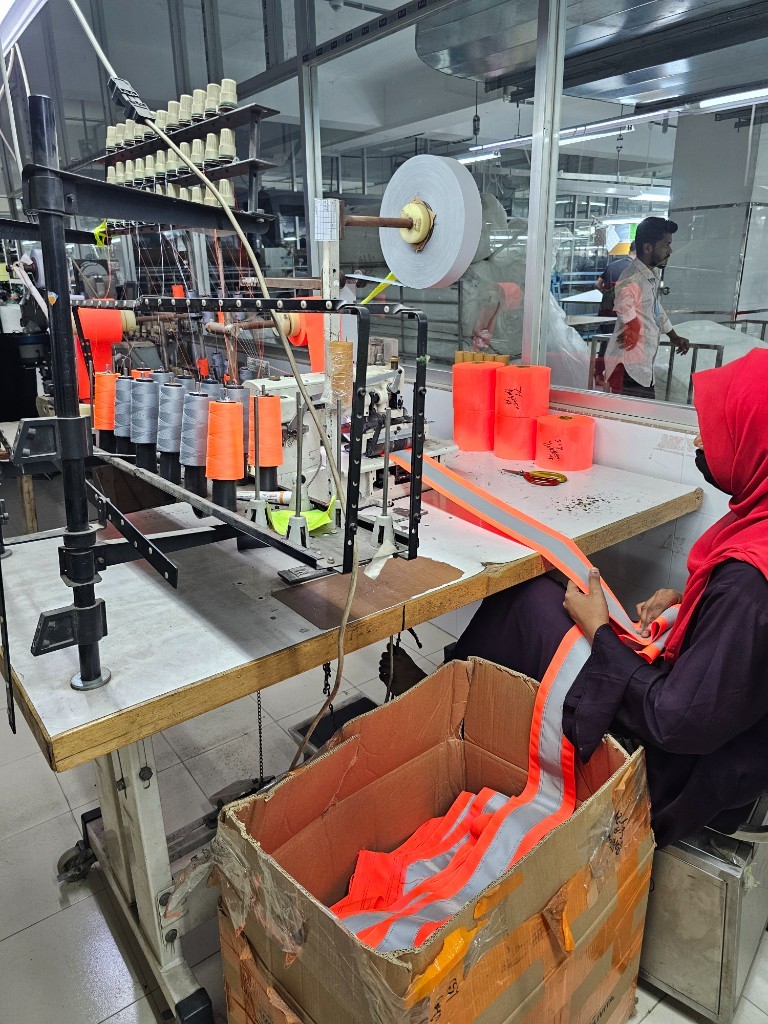
Getting it right requires heat-transfer equipment, trained operators and careful line management. A factory that produces clean sewn-tape vests efficiently may not be set up for segmented tape at all, and plenty will say otherwise. The supplier pool in Bangladesh that can handle segmented-tape hi-vis at export quality and a competitive ex-works price is real, but it is narrow. Factories that have got this right for volume export programmes tend to be protective of their capacity and selective about what they take on.
The MOQ problem most buyers don't anticipate
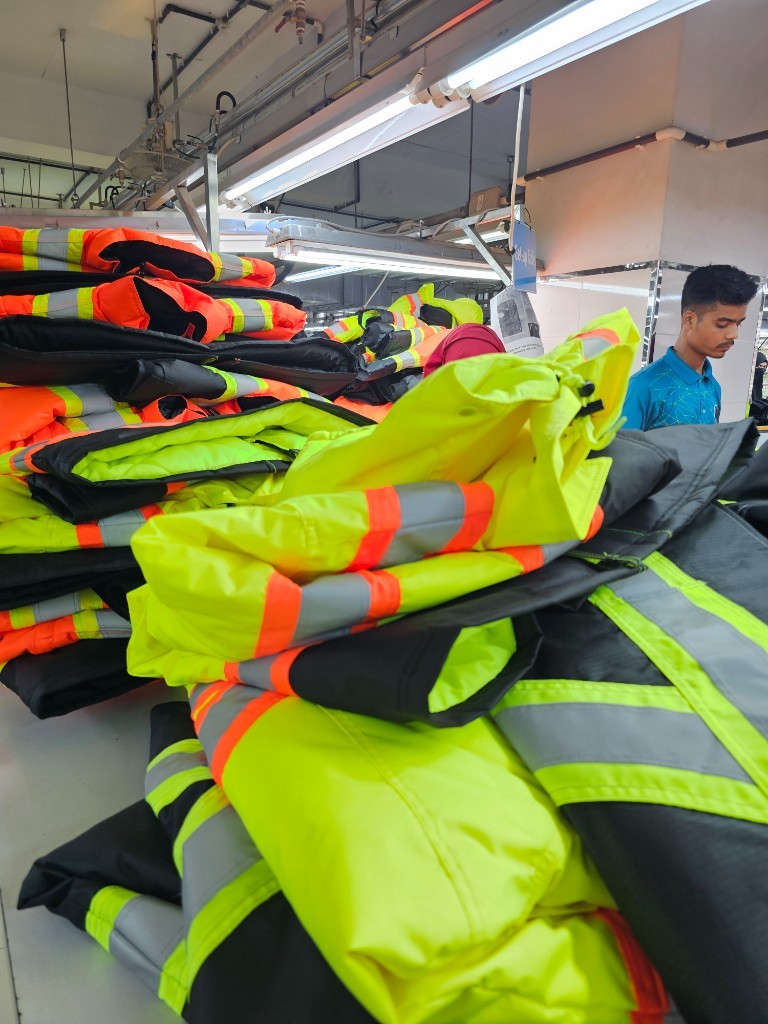
The factories in Bangladesh that have invested in proper hi-vis capability — dedicated equipment, established material routes, test lab relationships — did not do that to run small trial orders. They are typically set up for programmes of several thousand units per style per season, and they are selective about what they take on.
For buyers entering Bangladesh for the first time, building a new hi-vis range, or operating at realistic distributor volumes, this creates a genuine access problem. The factories worth working with are often not willing to engage at the quantities being offered. And the factories that will accept any quantity are frequently not the ones with the right capability or compliance track record. The two problems compound: a small supplier pool, with the capable end of it oriented towards scale.
Why the best hi-vis suppliers are hard to find
Unlike China, where hi-vis is a mature export category with suppliers actively exhibiting at trade shows and listed across sourcing platforms, Bangladesh hi-vis manufacturers are largely invisible on those channels. The category is simply too small and too new for most factories to be putting resource into international marketing. You will not find many of them at trade fairs, and online directories give you a shallow pool that rarely reflects where the genuine capability sits.
For most buyers, that means the usual starting points produce very little. A search that would take a few weeks in China can take months in Bangladesh, and without on-the-ground knowledge of which factories have actually invested in hi-vis production rather than just added it to a capabilities list, there is no reliable way to shortcut the process.
Building a sourcing model that works
Buyers who develop successful hi-vis programmes in Bangladesh workwear manufacturing rarely start by going factory-direct from a cold enquiry. The more reliable route is working through a sourcing partner with existing relationships in the category. Factories are more willing to engage at realistic entry quantities when the relationship is already established and there is a credible pipeline of business behind the buyer. It also means factory selection, material routing and compliance documentation are managed rather than worked out from scratch.
Different products also need different suppliers. A vest range, a segmented-tape polo programme and a taped-seam safety outerwear line are three different manufacturing propositions. Trying to consolidate everything through one supplier is a reasonable instinct, but it usually means compromising on at least one product. Category-led factory selection — routing each product to where it is genuinely made well, with material flows managed centrally and compliance documentation kept consistent across the range — is the structure that holds up on repeat production.
Source Workwear manages this process for hi-vis buyers building private label programmes in Bangladesh: factory selection, material routing, sampling, compliance and production follow-up. The goal is a supply model that repeats cleanly, not just a first order.
Planning a Bangladesh hi-vis route? Share your product brief — we will map a realistic factory route, material plan and programme structure.
Access the right hi-vis suppliers in Bangladesh
Source Workwear works directly with a curated set of Bangladesh suppliers that can produce hi-vis workwear at the right specification and at realistic programme quantities. We manage factory selection, material routing, sampling, compliance documentation and production follow-up.
Frequently asked questions
How many hi-vis suppliers are there in Bangladesh?
The number of factories in Bangladesh capable of producing hi-vis workwear to export quality is small. Most of Bangladesh's garment industry is built around basics and fashion, not technical workwear with compliance requirements. There are some factories genuinely set up for hi-vis production, but the pool is narrow — and the subset that can handle segmented-tape products or taped-seam outerwear at a competitive price is smaller still.
What MOQ should I expect from a Bangladesh hi-vis supplier?
Most factories with genuine hi-vis capability require upwards of 6,000 units per style. The investment in dedicated equipment, material routes and compliance processes means they are oriented towards volume programmes rather than smaller runs. Source Workwear can work with buyers at lower quantities than this, because our existing supplier relationships allow us to have a different conversation with factories than a buyer approaching them cold.
Can Bangladesh produce EN ISO 20471-compliant hi-vis workwear?
Yes. Selected factories in Bangladesh can produce garments that meet EN ISO 20471 Class 1, 2 and 3 requirements. The key is choosing the right factory for the product: background fabric photometrics, retroreflective tape specification, minimum material areas and wash durability all need to be managed correctly. Not every factory that claims EN ISO 20471 capability has the documentation or material traceability to support it.
Can Bangladesh produce segmented-tape hi-vis garments?
Yes, but the supplier pool is narrow. Segmented tape requires heat-transfer equipment, trained operators and wash-testing discipline that most Bangladesh factories have not invested in. A factory capable of producing clean sewn-tape vests is not automatically capable of segmented-tape polos or performance jackets. The capability exists, but buyers need to find the right supplier for this product tier specifically.
Can smaller buyers access good hi-vis suppliers in Bangladesh?
It is genuinely difficult to do so going factory-direct from cold. The factories with established hi-vis export programmes tend to prioritise larger, repeat-volume buyers and are selective about new relationships. Working through a sourcing partner with existing factory relationships is typically the most practical route for buyers at lower volumes or earlier in their Bangladesh sourcing journey.